Due Diligence: The Minimum Folder You Should Be Able to Assemble
This guide breaks down the minimum documents every founder needs to pass due diligence fast — from legal and finance to tax, compliance, and trust signals.
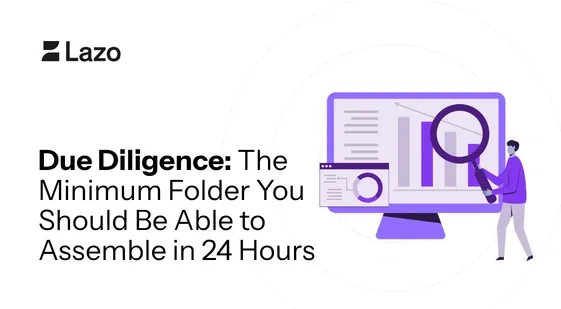
In the fast-moving startup world, speed matters. But what happens when that speed runs into the need for structure and compliance? For LATAM founders building toward the United States, due diligence preparation is not just a formality; it is a real stress test. The goal is not to have everything perfect from day one, but to be able to show that you have control of the business and a clear path to scale. Being able to put together a ‘minimum folder’ within 24 hours is not a trick. It is a signal of how healthy and credible your operation really is.
This year, events like Argentina Week 2026 in New York, where leaders such as Guillermo Rauch (Vercel), Martín Migoya (Globant), and Pierpaolo Barbieri (Ualá) discussed how Argentine talent is helping shape the global AI economy, made one thing clear: LATAM founders are thinking globally. But ambition alone is not enough. To turn opportunity into investment, preparation matters. A fast, well-structured due diligence folder is part of what allows a company to grow without friction.
What due diligence is and why the ‘24-hour test’ matters
Due diligence is the investigation and review process that a potential investor or acquirer carries out to verify the information a startup provides. It is their way of understanding the risks and opportunities before committing capital. For a founder, it is a chance to build trust and show that the vision is backed by a solid, transparent operation.
The ‘24-hour test’ is a metaphor. It does not mean every document has to be flawless within one day. It means that the critical information should be accessible, coherent, and easy to share within a very short time frame. If an investor asks for key materials and it takes weeks to gather them, that sends a warning signal. It suggests weak organization, unclear processes, or, in the worst case, hidden problems. Being able to respond quickly shows cross-border clarity and a founder-first mindset, two attributes that are central to LAZO’s approach.
Legal folder and corporate structure: the foundation of your startup
Your startup’s legal structure is the skeleton everything else is built on. For LATAM founders, that often means incorporating in the United States, usually as a Delaware C-Corp. Investors will typically want to review:
- Incorporation documents: certificate of incorporation, bylaws, and shareholder agreements.
- Cap table: clear, current, and showing who owns what percentage of the company, including options and warrants. This is essential to understand dilution and ownership.
- Founder agreements: documents defining roles, responsibilities, equity vesting, and exit clauses.
- Key contracts: agreements with employees, consultants, customers, and vendors, especially those covering intellectual property.
A messy cap table or missing founder agreements are immediate red flags. Clarity here is a core part of investor-ready bookkeeping and of the trust an investor places in the company.
Finance folder: the story your numbers tell
Your numbers tell the story of your business. Even if your startup has not generated revenue yet, the way you manage finances still matters. Investors will usually expect to see:
- Basic financial statements: a simple but accurate P&L and balance sheet. They do not need to be audited, but they should be internally consistent.
- Financial projections: a model showing how you plan to grow, your key assumptions, and when you expect to reach profitability.
- Runway and burn rate: how much time your current capital gives you and the pace at which you are spending it. This shows you understand your liquidity.
- Books and records: even if they are basic, they should be organized. A good bookkeeping system for startups matters from the start.
Investor-ready bookkeeping means keeping financial records that are accurate, transparent, and up to date, not only to meet accounting requirements but also to make investor review easier by showing the company’s financial health and growth potential in a clear way.
Tax and compliance folder: navigating complexity without friction
Tax and regulatory compliance can feel like a maze, especially for cross-border startups. Investors want to know there are no hidden liabilities or major legal risks. Even with no revenue, some obligations still exist:
- Tax records: tax identification number (EIN) and basic filing records, even if they are zero returns.
- Licenses and permits: any operating licenses required for your business model or industry.
- Privacy policies and terms of service: essential if you handle user data.
- Employment compliance: if you have employees, make sure federal and state labor rules are being followed.
Startup-speed compliance means a startup can meet legal and tax obligations efficiently and proactively without slowing down innovation and growth. It is about building lightweight processes and tools that keep the business compliant while it scales fast.
Trust signals: beyond the documents
Due diligence is not only about paperwork. It is also about people and about the credibility of the team behind the company. Investors look for trust signals such as:
- Team: résumés of the founders and key team members, highlighting relevant and complementary experience.
- Traction: user metrics, growth, pilots, testimonials, or any evidence that the product or service is resonating in the market.
- References: contacts from customers, advisors, or previous investors who can validate your work and reputation.
- Community: being part of a founder community or startup ecosystem can be a meaningful differentiator. LAZO, for example, actively supports a community of LATAM founders.
As Juan Manuel Barrero, CEO of LAZO, puts it: “Trust is not improvised. It is built through every decision and every document that is kept in order. Being ready for due diligence within 24 hours is the strongest calling card a serious founder with global ambition can have.”
Follow-up: data room and permissions
Once you have your minimum folder, the next step is to organize it in a virtual data room. Tools such as Google Drive, Dropbox, or specialized platforms let you share documents securely and with control. Make sure you have:
- Logical organization: clear folders and descriptive file names.
- Access control: give permissions only to the people who need them and revoke access when necessary.
- Version control: keep track of versions for key documents.
This shows professionalism and efficiency, reinforcing the image of a startup that can grow without friction.
24-hour checklist
Frequently Asked Questions (FAQ)
**Q:**Why does speed matter so much in due diligence?
**A:**Because speed signals organization, transparency, and control over your information. That builds investor trust and helps avoid critical delays during a fundraise.
**Q:**What if my startup still has no revenue?
**A:**Even without revenue, it is important to keep finances organized, understand your burn rate, and stay on top of basic tax and compliance obligations. That shows seriousness and long-term potential.
**Q:**Do I need a Delaware C-Corp from day one?
**A:**For many LATAM founders planning to raise venture capital in the U.S., a Delaware C-Corp is the structure investors usually prefer. Still, that decision should be validated with a professional.
**Q:**How can I show trust signals if we do not have much traction yet?
**A:**Focus on the founders’ experience, the complementarity of the team, the clarity of the vision, the organization of your documentation, and validation from trusted advisors or mentors.
**Q:**What is a data room and why do I need one?
**A:**A data room is a secure repository where investors can review your startup’s information. It is essential for sharing documents in an organized, controlled, and professional way during due diligence.
Conclusion: Build your future with LAZO
Being able to present a solid due diligence folder within 24 hours is not just a capability. It is a mindset. It is the mindset of a founder who values clarity, works with a founder-first mentality, and understands that startup-speed compliance is an enabler rather than a burden. At LAZO, we understand the specific challenges LATAM founders face when building in the U.S. Our connected system brings incorporation, taxes, bookkeeping, and growth support together in one place, so you can scale with confidence, stay compliant, and focus on what you do best: building and growing.
Do not let bureaucracy slow down your vision. With LAZO, you have a partner that keeps your startup stable while you move fast, turning cross-border complexity into cross-border clarity.
Ready to strengthen your next fundraising process or simply get your financial house in order? Contact LAZO for a demo and see how we can help you grow without friction.